
"South America"
5000 article(s) found

High quality Sanrita estate coffee beans grinding degree roasting degree processing method
Growing coffee also requires sunlight and proper shade, and is best done on fertile or volcanic ash soil. Therefore, coffee is widely distributed in South America, Central America, West Indies, Asia, Africa, Arabia, South Pacific and Oceania. Ethiopia and Tanzania in Africa, Brazil, Colombia, Jamaica, Guatemala and Mexico in Central and South America

Top Coffee in the World introduction to South American Coffee
South American coffee SOUTH AMERICA COFFEES Brazil coffee Brazil Coffee Colombia coffee Colombia Coffees secret coffee Peru Coffees Bolivian coffee Bolivia Coffees Venezuelan coffee Venezuela Coffees Ecuador coffee Ecuador Coffees

Coffee beans in Central and South America Colombian flavor coffee
Columbia Coffee Columbia Coffee (Cafe de Colombia), which originated in Colombia, is one of the few individual coffees sold in the world under the name of the country. In terms of quality, it has won praise unmatched by other coffee. Compared with other producing countries, Colombia is more concerned with developing products and promoting production. It is this point, coupled with its superior geographical conditions and climatic conditions.

Coffee producing areas of South America | how to deal with Brazilian coffee beans to create a balanced nut flavor
Professional coffee knowledge exchange more coffee bean information please follow the coffee workshop (Wechat official account cafe_style) front street-South American coffee producing area introduction Brazilian coffee, generally refers to the coffee produced in Brazil. There are many kinds of coffee in Brazil. Like other Arabica coffee, Brazilian coffee is called Brazils to distinguish it from Milds coffee. Most Brazilian coffee is unwashed and is

Introduction to the flavor and taste characteristics of fine coffee beans in the mellow and smooth Peruvian coffee manor area
In 1542, the Spanish royal family set up the Government House in Lima and established the Governor's District of Peru, which became the center of Spanish colonial rule in South America. At that time, Peruvian commerce was prosperous, merchants controlled most of South America's import and export trade, and the precious metals and other goods looted by the Spaniards from South America were shipped out of Peru. The colonists invaded the land in Peru, forced the Mita system, and forced the Indians to go to the mines.

What are the main coffee producing areas? where is the origin of famous coffee?
Coffee comes from coffee beans, which are harvested and processed from the fruit of trees. Coffee trees grow at the center of the equator, between latitudes of 25 degrees south and north, and are called the homes of tropical or subtropical countries called coffee belts. At present, there are about 60 coffee-producing countries. Coffee is produced in South America, Central America, the West Indies, Asia, Africa, Arabia, the South Pacific and

Coffee from Central and South America, the birthplace of Ethiopian coffee
Coffee trees come from Ethiopia, from wild coffee forests and semi-developed land to traditionally operated plots of land to modern plantations. About 50% of the coffee is grown more than 1500 meters above sea level. The flavor of Ethiopian coffee is difficult to describe. It is neither strong nor sour. Therefore, it is not suitable for deep baking, otherwise it is easy to lose.

Honduras, a coffee producing country in Central and North America
Honduras is a mountainous country in Central and North America with a population of more than 8.3 million and an area of about 112,000 square kilometers. Located in northern Central America. It is bordered by the Caribbean Sea to the north, the Gulf of Fonseca in the Pacific Ocean to the south, Nicaragua and El Salvador to the east and south, and Guatemala to the west. More than three-quarters of the territory is mountainous and plateau. Mountains extend from west to east, inland for lava plateau, mountainous
The three largest coffee producing areas in the world: African coffee, American coffee, Asian coffee, coffee beans
Latin America, Africa, Asia and Latin America are the three major coffee producing regions in the world: Latin America is the full name of Latin America, and Latin America is part of the Americas. In a narrow sense, it includes the American countries and regions with Latin languages as the official languages; in a broad sense, it includes all American countries and regions south of the United States. Latin America has a land area of 19197000 square kilometers, accounting for nearly 13% of the earth's land surface.
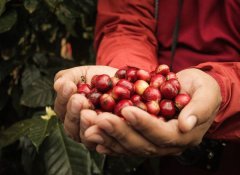
Costa Rica where coffee beans are grown in Central and South America.
Costa Rican coffee cultivation was introduced by Cuba in 1779 and exported for the first time in 1820. There are about 32000 coffee farmers, with an average planting area of less than one hectare (10000 hectares) per farmer. Costa Rica has a population of 41 billion (2006), with a coffee planting area of 82500 hectares and an annual production of 1.7 million bags (60kgs per bag). The annual domestic consumption is 380000 bags.

Characteristics of Latin American coffee beans manor flavor and taste-an introduction to the characteristics of coffee beans from three producing areas
Characteristics of Latin American coffee beans manor flavor and taste-the characteristics of coffee beans from three producing areas introduce that growing coffee also requires daylight and proper shade, which is most suitable for planting on fertile soil or volcanic ash soil. Therefore, the origin of coffee is widely distributed in South America, Central America, the West Indies, Asia, Africa, Arabia, the South Pacific and Oceania. Such as Ethiopia in Africa,

Waiqiang Plateau Coffee Manor Central and South America
High-quality coffee beans are refined by water treatment. The coffee beans with less impurities can be obtained by the water washing method, but if the water quality and time are not properly controlled during the fermentation process, the coffee beans will easily be infected with the sour taste of excessive fermentation. and dry beans also need to pay attention to timely re-inspection to prevent coffee beans from being contaminated by wet ground and sundries. Processed

The Honduran Coffee region of Central and North America introduces boutique coffee.
Honduras is a mountainous country in Central and North America, with a population of more than 8.3 million and an area of about 112000 square kilometers. Located in the north of Central America. It is bordered by the Caribbean Sea to the north, the Gulf of Fonseca in the Pacific Ocean to the south, Nicaragua and El Salvador to the east and south, and Guatemala to the west. More than 3/4 of the territory are mountains and plateaus. The mountains extend from west to east, inland is a lava plateau, mountainous
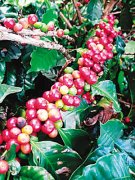
Peruvian Coffee Flavor in Central and South America
Peru has good economic conditions and a stable political situation, thus ensuring the good quality of coffee. However, there are many local problems, in addition to guerrilla warfare and drug trafficking, the emergence of cholera along the coast in the mid-1990s led to a further economic depression, and what is more, the annual inflation rate reached 7000%. In the mid-1970s, Peru produced about 9 percent of its coffee a year.

Varieties of coffee beans in Africa and South America
Neutral Brazil, El Salvador, lowland Costa Rica, Venezuela, Honduras, Cuba. Mellow Colombian metenin, Mocha, Blue Mountains, Guatemala, Costa Rica. Generally speaking, sour coffee beans, especially high-quality new beans, are best roasted shallower, while bitter coffee beans are roasted shallower, and then sweet details are mostly in the highlands.

Venezuelan coffee beans from South America have the characteristics of light taste and less sour taste.
Venezuela oil was once considered the main export of Venezuela (Venezuela). Although coffee trees were introduced from Martinique in 1730 and Venezuela, coffee production was almost abandoned at the height of the oil industry. Recently, coffee plantations have begun to recover, with the original Tipica and bourbon coffee trees and new plantations for coffee.
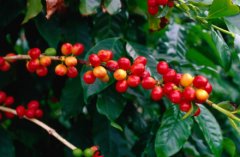
The planting and Distribution of Coffee trees in the World
Coffee is distributed near the equator, tropical and subtropical regions. It is widely distributed in South America, Central America, West Indies, Asia, Africa, Arabia, South Pacific and Oceania. Brazil leads the world in coffee production, accounting for about 30 per cent, followed by Colombia, accounting for about 10 per cent. Taking Central and South America as the center accounts for 60%, followed by Africa and Arabia accounting for about 30%, and the remaining 10%

Introduction to the Variety characteristics of Santa Rita Coffee Bean Flavor treatment in Colombia
Colombia Santa Rita Manor Coffee Flavor description Colombia is one of the largest producers of high-quality coffee in the world, a bright pearl in the world coffee map, and a blessed place for coffee. Arabica coffee is grown on steep slopes 800 to 1900 meters above sea level and is hand-picked and washed. [Santa Rita, Colombia] (depth of washing
South America Brazil coffee giant Brazil Santos boutique coffee beans
The Brazilian Santos variety comes from South America and Brazil is the world's number one coffee producer, accounting for about 30% of the world's total production. Almost all Santos coffee is produced in southeastern Brazil and is the best coffee in Brazil. Raw bean granules can be found from medium to large, but without green, they are neutral coffee. Brazil's "Vicky Gotti Manor" comes from Brazil's top boutique coffee estate "Fazenda\ Var".

What are the characteristics of South American coffee beans? how do Colombian coffee beans taste highly balanced?
Professional Coffee knowledge Exchange more coffee bean information please follow Coffee Workshop (Wechat official account cafe_style) Front Street-Columbia Coffee introduction from Alaska in the north to Tierra del Fuego in the south, the Cordillera Mountain system, which stretches for 15,000 kilometers through the western part of the North and South American continents, is the longest wrinkled mountain system in the world. Its section in North America is the famous Rocky Mountains, Canada.